Digital Printing
Digital Printing
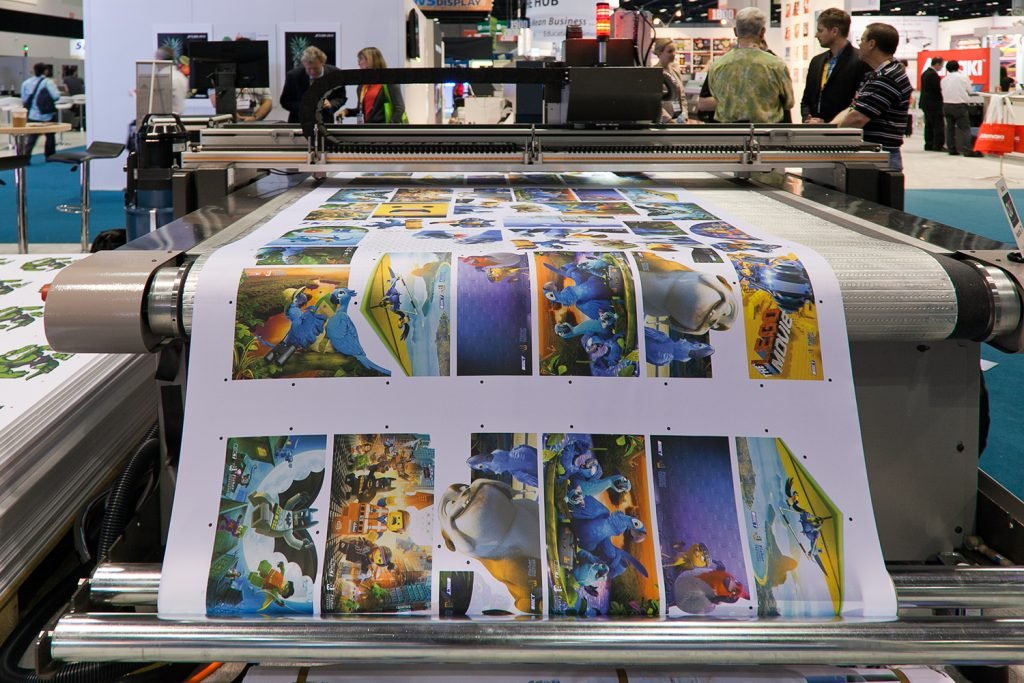
Digital printing uses a digital-based image to print directly onto a variety of media. It generally refers to professional printing, where printers produce small-run jobs from desktop publishing and other digital sources using large-format and high-volume laser or inkjet printers. Although digital printing costs more per page than traditional offset printing methods, it usually offsets this cost by eliminating the need to create printing plates.
It also allows on-demand printing, short turnaround times, and even the ability to change the image for each print. The savings in labor and the continuously increasing capability of digital presses. Mean that digital printing can now match or even replace offset printing technology in producing larger print runs of several thousand sheets at a low cost.
Fine art inkjet printing prints directly from a computer image file to an inkjet printer as the final output. It developed from digital sealing technology from Kodak, 3M, and other major manufacturers. While artists and printers adapted these dedicated prepress sealing machines for effective fine art printing.
Many of these printers underwent experimentation. The most notable being the IRIS printer. Which software engineer David Coons first adapted for effective fine art printing, and Graham Nash later used for artwork at his Nash Editions printing studio in 1991. Initially, these printers could only print on glossy papers. But the IRIS Graphics printer allowed artists to use a variety of papers. Including both traditional and non-traditional media. The IRIS printer remained the standard for fine art printmaking for many years, and although it still sees some use today. Large-format printers from companies like Epson and HP now use fade-resistant. Archival inks and specially designed substrates for fine art printing.